
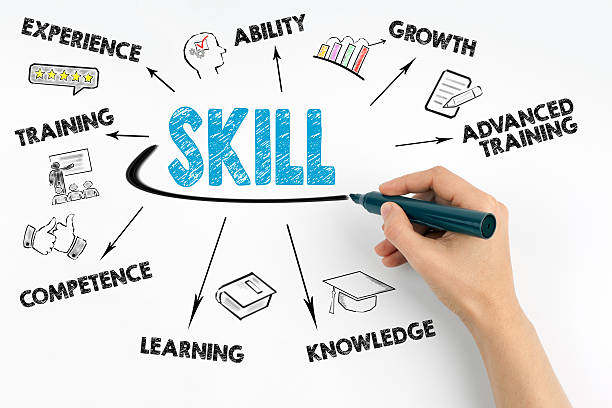
Targeted English instruction focuses on precision rather than volume, ensuring that learners build skills that are practical, measurable, and academically relevant. With guidance from an experienced English tutor in Dubai, instruction moves beyond surface-level learning to address how students read critically, write clearly, and comprehend complex information in real academic and professional contexts. Many learners struggle not because of a lack of motivation, but because essential language foundations were never fully developed or were learned inconsistently. When these gaps remain unaddressed, they affect performance across all subjects that rely on English for instruction and assessment.
Focused instruction identifies these weaknesses early through structured evaluation and then applies tailored strategies to strengthen them systematically. Instead of overwhelming students with excessive content, this approach prioritizes depth, clarity, and skill integration. As learners begin to understand how language works rather than simply memorizing rules, confidence naturally improves.
Developing Strong Reading Skills Through Focused Analysis
- Text-level comprehension training
Learners are trained to analyze passages by identifying central ideas, key arguments, and supporting details with accuracy.
This structured breakdown improves understanding of complex texts across academic subjects.
It reduces reliance on guesswork and strengthens logical interpretation during assessments. - Vocabulary acquisition through context
Students learn vocabulary through sentence usage rather than isolated memorization.
This approach improves word retention and helps learners understand meaning through context clues.
It enables confident interpretation of unfamiliar terms in academic reading materials. - Active reading techniques
Annotation and summarization encourage learners to engage directly with the text.
Question-based reading builds critical thinking and improves focus during study sessions.
These techniques move students beyond surface reading toward deeper comprehension. - Curriculum-aligned reading practice
Reading materials are carefully chosen to reflect current academic curricula.
Students apply reading strategies directly to classroom topics and subject-specific texts.
This alignment ensures relevance and immediate improvement in academic performance. - Progressive difficulty scaling
Text complexity is increased gradually to match the learner’s growing skill level.
This method prevents cognitive overload while maintaining steady intellectual challenge.
It builds confidence while systematically strengthening analytical reading abilities.
Enhancing Writing Accuracy and Structure
- Sentence construction mastery
Learners develop control over grammar, punctuation, and syntax through structured writing tasks.
This approach reinforces technical accuracy while maintaining natural writing flow.
It helps students produce clear, error-free sentences across academic contexts. - Paragraph development strategies
Instruction focuses on building strong topic sentences and logical idea progression.
Students learn to organize their thoughts clearly rather than writing disconnected points.
This results in cohesive paragraphs that communicate ideas effectively. - Purpose-driven writing practice
Writing activities are aligned with specific objectives such as explanation or analysis.
Learners understand how to adjust tone, structure, and language for different purposes.
This improves adaptability across academic and professional writing tasks. - Editing and revision skills
Students are trained to evaluate their own writing with a critical eye.
They learn how to identify weaknesses and refine content independently.
This process strengthens long-term writing quality and self-reliance. - Feedback-based improvement cycles
Feedback focuses on recurring patterns instead of isolated mistakes.
Learners understand underlying issues and apply corrections consistently.
This cycle leads to steady, measurable improvement in writing performance.
Strengthening Comprehension Through Language Awareness
- Grammar in context
Learners explore grammar as a tool that shapes meaning within sentences and passages.
This contextual approach strengthens understanding rather than rote rule application.
It enhances both reading comprehension and accurate written expression. - Logical reasoning in language
Instruction links sentence structure to logical flow and meaning.
Students learn how ideas connect within explanations and arguments.
This improves clarity and accuracy when interpreting complex texts. - Inference and interpretation skills
Learners are trained to identify implied meanings beyond explicit statements.
They analyze tone, intent, and perspective within written content.
This skill supports deeper comprehension of academic and literary texts. - Question analysis techniques
Students learn to break down questions to identify key requirements.
This reduces misinterpretation and improves response accuracy.
It is especially valuable for examinations and structured academic tasks. - Application across subjects
Comprehension strategies are applied to content in science, humanities, and mathematics.
Students learn how language functions differently across disciplines.
This reinforces the practical and transferable value of strong comprehension skills.
Personalized Instruction for Consistent Skill Development
- Individual learning diagnostics
Initial assessments evaluate language skills in detail to identify true strengths and gaps.
This ensures instruction is based on evidence rather than assumptions.
Targeted support leads to faster and more effective skill development. - Customized lesson pacing
Lessons are paced according to the learner’s individual ability and progress.
This approach prevents overwhelm while reinforcing mastery at each stage.
Students remain engaged and motivated throughout the learning process. - Skill integration approach
Reading, writing, and comprehension skills are taught as interconnected abilities.
This mirrors how language is used in real academic environments.
Integrated learning improves consistency and practical application. - Confidence-focused learning environment
Personalized support creates a safe space for active participation.
Learners feel comfortable asking questions and making corrections.
This confidence accelerates progress and long-term retention. - Professional guidance alignment
Instruction is guided by clear academic standards and measurable objectives.
Experienced English tutor in Dubai supports and ensures structured learning outcomes.
This alignment maintains relevance across curricula and academic goals.
Final Thoughts
Targeted English instruction delivers measurable improvement by addressing how learners read, write, and comprehend information in real academic contexts. Through structured analysis, purposeful writing practice, and personalized guidance, students develop clarity, accuracy, and confidence that extend beyond language lessons. These skills strengthen performance across curricula, support independent learning, and prepare learners to meet future academic and professional challenges with greater competence and consistency.
For those seeking structured academic support, professional guidance through a dedicated learning environment can make a meaningful difference. The Tutoring Center Dubai delivers this approach through carefully designed academic programs that prioritize clarity, structure, and measurable progress. The resources and structured learning pathways support learners in strengthening essential language skills through focused instruction. With support from a qualified English tutor in Dubai, students can achieve lasting academic growth built on precision, confidence, and consistent skill development.