
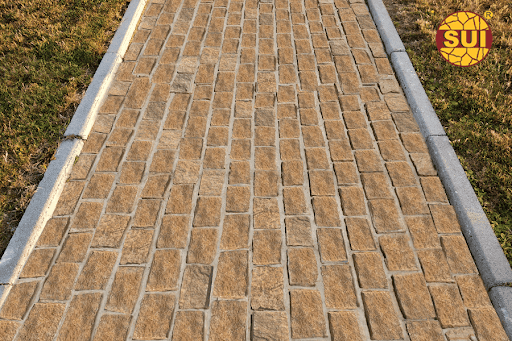
As we navigate the architectural landscape of 2026, the industry is undergoing a definitive shift toward materials that embody both permanence and planetary responsibility. The global push for Net Zero urban environments has led architects to move beyond high-tech synthetic solutions and return to the most ancient of building materials: natural stone. Among these, cobblestones are experiencing a major resurgence.
In modern design, cobblestones are no longer viewed merely as a heritage aesthetic. Instead, they are being recognized as a high-performance, eco-friendly solution to 21st-century urban challenges such as stormwater management, the urban heat island effect, and the need for low-embodied-carbon infrastructure.
This deep dive explores the scientific and architectural reasons why natural cobblestone is the definitive sustainable choice for the contemporary era.
1. Minimal Embodied Carbon and Processing
One of the primary metrics for sustainability in 2026 is embodied carbon, the total greenhouse gas emissions associated with the extraction, production, and transportation of a material.
Unlike concrete or asphalt, which require energy-intensive chemical processing and high-heat kilns, natural cobblestones are harvested directly from the earth. Whether sourced as river-washed stones or quarried from granite, basalt, or limestone deposits, the manufacturing process is largely mechanical.
2. Advanced Permeability and Stormwater Management
In 2026, urban resilience is centered on sponge city concepts, designing landscapes that can absorb and manage extreme rainfall. Traditional asphalt is impermeable, forcing water into overworked municipal drainage systems and carrying pollutants into local waterways.
Cobblestones offer a natural solution through their installation method:
- Void Spaces: When installed on a sand or fine gravel base without rigid mortar, the joints between cobblestones allow rainwater to percolate directly into the ground. However, a proper slope must be provided during cobblestone installation so that surface water drains away instead of sitting on the stones over time.
- Groundwater Recharge: This filtration process replenishes local aquifers and supports the health of surrounding urban greenery and trees.
- Pollutant Filtration: As water moves through the aggregate layers beneath the cobblestones, it undergoes natural filtration, reducing the concentration of heavy metals and hydrocarbons before the water reaches the soil.
For architects, this permeability can reduce the need for expensive underground detention tanks and complex drainage infrastructure, simplifying the site plan while meeting strict 2026 environmental regulations.
3. Mitigation of the Urban Heat Island (UHI) Effect
Dark, non-porous surfaces like asphalt absorb massive amounts of solar radiation during the day and release it as heat at night, significantly raising the ambient temperature of cities.
Natural cobblestones, particularly those in lighter shades of granite, sandstone, or quartz, have a higher Albedo (solar reflectance) than traditional paving.
Furthermore, cobblestone systems are permeable, they retain moisture in the substrate. This moisture evaporates through the joints during the heat of the day, providing a natural evaporative cooling effect for the street level.
4. Unrivaled Longevity and Life-Cycle Assessment (LCA)
A truly sustainable material must last. The Life-Cycle Assessment of cobblestones is the strongest in the architectural world. While a standard concrete sidewalk may require replacement every 20–30 years due to cracking and degradation, cobblestone roads from the Roman era are still functional today.
- Mechanical Durability: Natural stones like granite and basalt have high compressive strength and are virtually impervious to the freeze-thaw cycles that shatter rigid pavement.
- Graceful Aging: Unlike synthetic materials that look worn out as they age, natural stone develops a patina. It weathers gracefully, meaning its aesthetic value increases over time rather than decreasing.
- Modular Repairability: If a single cobblestone is damaged or if underground utilities need repair, the stones can be lifted individually and replaced. This eliminates the need for “patching” with new concrete, which often leads to visual inconsistency and structural weak points.
5. Recyclability and the Circular Economy
In the 2026 architectural framework, the circular economy is no longer optional. Cobblestones are the ultimate recyclable material. They are one of the few building components that can be harvested from a 100-year-old road and immediately reused in a modern luxury development without any loss in quality.
When a cobblestone surface reaches the end of its intended use in one location, it does not head to a landfill. It is reclaimed, cleaned, and repurposed.
This cradle-to-cradle lifecycle ensures that the environmental investment made during the initial quarrying continues to pay dividends for centuries.
6. Biophilic Design and Tactile Connectivity
Sustainability is also about human well-being. Biophilic design, the practice of connecting people with nature through the built environment, is a core trend in 2026. The irregular textures, varied earthy tones, and organic feel of cobblestones provide a tactile connection to the earth that smooth, machine-made surfaces cannot.
Architects are using cobblestones to create slow zones in urban environments. The natural vibration and sound produced when walking or driving slowly over cobblestones signal a transition from high-speed transit to pedestrian-friendly, human-centric spaces. This improves the livability of urban centers, supporting the social pillar of sustainability.
Conclusion
As the world is moving toward more conscious construction, the best material is often the one that has already proven its worth over millennia. Natural cobblestones align perfectly with the 2026 architectural goals of carbon reduction, climate resilience, and circularity.
By choosing stone, architects are not just looking back at history; they are paving a more sustainable, cooler, and more beautiful future.
Are you an architect looking for a sustainable Cobblestones supplier? Stone Universe Inc. is your trusted partner for all architectural needs. Visit the official website to explore products.