
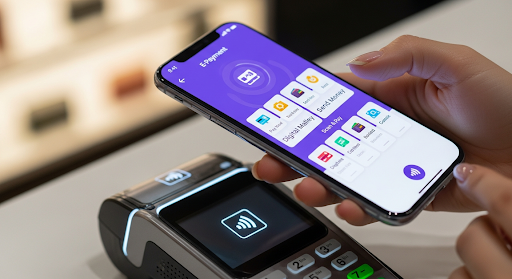
Public service delivery is closely linked to how efficiently citizens can complete essential transactions. Whether it involves paying statutory fees, accessing municipal services, or completing regulatory payments, the payment experience often defines public perception of governance. Integrated platforms eliminate fragmentation by connecting services, departments, and financial workflows into a unified ecosystem. By adopting digital payment solutions, public institutions create smoother interactions, reduce inefficiencies, and establish stronger trust with citizens.
1. Unified Platforms for Seamless Service Access
Integrated payment systems consolidate multiple government services into a single, coherent framework. This eliminates the need for citizens to navigate separate portals, processes, or payment rules for each department.
- Single-point interaction across departments
Citizens can complete payments for permits, licenses, utilities, and public services through one platform. This removes confusion caused by multiple logins and inconsistent interfaces, allowing users to move between services without interruption. - Reduced transaction errors and duplication
When payment data flows automatically between connected systems, discrepancies caused by manual entry are minimized. Duplicate payments, missing records, and verification delays become less frequent, improving overall reliability. - Consistent user experience across services
Standardized workflows ensure that citizens encounter familiar steps regardless of the service accessed. This consistency builds confidence, reduces dependency on assistance, and increases adoption of digital public services.
Unified access transforms government platforms from fragmented systems into cohesive service environments.
2. Faster Processing and Reduced Administrative Delays
Traditional payment methods often rely on manual verification and inter-departmental reconciliation. Integrated systems automate these processes, allowing transactions to be confirmed and processed instantly.
- Instant payment validation
Transactions are authenticated in real time, enabling services to proceed without waiting for manual confirmation. This accelerates approvals, renewals, and service activation for citizens. - Automated reconciliation and reporting
Financial data is synchronized across departments, eliminating the need for time-consuming reconciliation. Authorities can generate accurate reports instantly, improving financial oversight. - Lower operational overhead for agencies
Automation reduces staff workload related to data entry, error correction, and follow-ups. Resources can then be redirected toward service enhancement and citizen engagement.
Faster processing improves both administrative efficiency and citizen satisfaction.
3. Improved Transparency and Financial Accountability
Transparency is essential for maintaining trust in public institutions. Integrated systems provide clear visibility into transactions, making financial operations easier to track and audit.
- Clear transaction histories for citizens
Citizens receive detailed payment records, confirmations, and digital receipts. This clarity reduces disputes, improves accountability, and empowers users to track their interactions with government services. - Centralized monitoring for authorities
Government bodies can oversee collections across departments from a single dashboard. This enables better control over revenue streams and timely identification of discrepancies. - Stronger compliance with financial standards
Standardized workflows support regulatory compliance and auditing requirements. This consistency strengthens institutional credibility and governance practices.
Transparency enhances confidence while reinforcing fiscal discipline.
4. Greater Accessibility and Inclusive Service Delivery
Integrated platforms expand access to services by supporting multiple payment methods and eliminating physical and time-based constraints.
- Multiple payment options in one framework
Citizens can choose from various payment modes within a single system. This flexibility accommodates different preferences and technological access levels. - Availability beyond office hours
Payments can be completed at any time without visiting physical offices. This benefits working individuals and reduces congestion at service counters. - Support for remote and underserved areas
Integrated platforms enable citizens in distant regions to access services without travel. This promotes equity and inclusion across geographic boundaries.
Accessibility ensures public services reach a wider population effectively.
5. Data-Driven Insights for Service Optimisation
Integrated systems generate valuable transactional data that supports strategic planning and service improvement.
- Demand forecasting and planning
Payment trends reveal usage patterns that help authorities anticipate demand. This allows better allocation of resources and proactive service planning. - Identification of service bottlenecks
Analytics highlight delays and inefficiencies within the service lifecycle. Addressing these areas leads to smoother citizen journeys. - Performance benchmarking across departments
Comparative insights promote consistency and encourage underperforming departments to improve operational standards.
Data-driven insights transform payments into tools for continuous improvement.
6. Enhanced Security and Risk Management
Security is a critical component of public sector transactions. Integrated systems centralize safeguards, reducing vulnerabilities associated with disconnected platforms.
- Standardized encryption and authentication
Uniform security protocols protect sensitive information across all services. This ensures consistent data protection standards. - Real-time fraud detection mechanisms
Central monitoring enables early identification of suspicious activity. Potential risks can be addressed before they escalate. - Controlled access and audit trails
Defined permissions and detailed logs enhance accountability. Authorities can trace actions and respond effectively to incidents.
Robust security frameworks protect both citizens and institutions.
7. Scalability for Expanding Public Services
Public service demands evolve continuously. Integrated payment systems provide the flexibility needed to scale without operational disruption.
- Easy onboarding of new services
New payment categories can be added seamlessly within the existing framework, reducing deployment time. - Support for increasing transaction volumes
Centralised systems manage growth efficiently, maintaining performance even during peak periods. - Alignment with smart governance initiatives
Scalable platforms integrate smoothly with broader digital governance strategies.
Scalability ensures long-term sustainability and adaptability.
8. Consistent Citizen Experience Across Touchpoints
Consistency across services strengthens trust and encourages continued engagement with digital platforms.
- Predictable and intuitive payment journeys
Familiar interfaces reduce errors and frustration, making services easier to use independently. - Reduced service fragmentation
Citizens perceive government services as interconnected rather than isolated entities. - Higher satisfaction and engagement levels
Positive experiences encourage repeat usage and greater adoption of digital services.
Consistency reinforces a citizen-centric service culture.
Conclusion
Integrated payment systems significantly enhance citizen service delivery by improving efficiency, transparency, accessibility, and security. They simplify complex interactions and create a more connected public service ecosystem. The use of e-payment systems within integrated frameworks further strengthens operational resilience and supports modern governance objectives.
Platforms such as GOVX.0 play a pivotal role in advancing this transformation by bringing together government leaders, technology providers, and industry experts. Through collaboration and innovation, GOVX.0 supports the development of scalable, secure, and citizen-focused payment ecosystems that elevate the standard of public service delivery.