
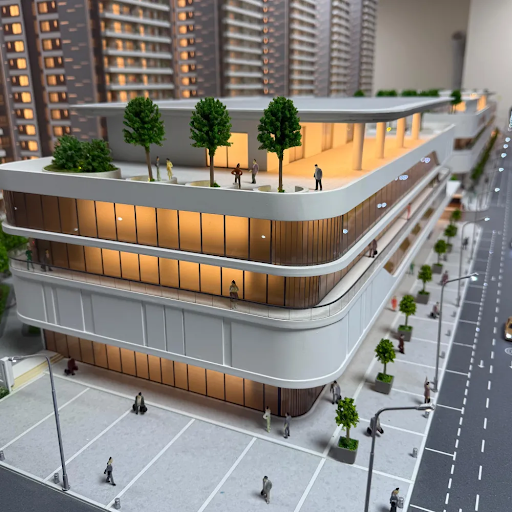
When a developer presents a new building, community, or mixed-use project, the biggest challenge is helping stakeholders imagine something that does not physically exist yet. Floor plans and computer renders are helpful, but they rarely trigger the emotional connection buyers and investors need to feel confident. This is exactly where architectural models reshape the selling journey. By turning imagination into a physical miniature environment, developers make conversations more tangible, and far more persuasive.
Architectural models allow prospects to observe scale, layout, elevation, and surrounding context all at once. Instead of guessing how sunlight hits a terrace or how wide the road is around a tower, they see it instantly. And when information becomes immediate, decisions happen faster.
Why Physical Models Increase Buyer Confidence
Developers spend enormous resources building trust. A physical model works like evidence. It shows quality, proportion, materials, height, and spatial structure much more clearly than numbers on paper.
Buyers often struggle with questions like:
“How big is this unit compared to the next building?”
“Where is the parking entrance?”
“What does the city view actually look like?”
A model gives answers without long explanations. It makes the project real enough to touch and observe from every angle. People believe what they can see, and this naturally shortens the decision-making stage.
The Psychology Behind Faster Sales
There is a psychological element too. Human brains process physical form and movement faster than abstract drawings. When someone walks around a miniature city or turns a model to view different sides, they form a personal connection with the design.
Simply put, seeing triggers desire. Desire leads to action.
Developers who use architectural models report higher engagement during presentations and better conversion at early discussion stages. Prospects stay longer, ask fewer basic questions, and move toward pricing discussions sooner.
Bringing Complex Projects Into Focus
Large developments, especially communities, waterfronts, and commercial zones—often look complicated on screens. However, a scale model breaks complexity into a natural form.
Instead of trying to decode 3D software, stakeholders instantly understand how multiple buildings relate to each other, how pedestrian paths flow, or how the project interacts with natural surroundings.
This clarity becomes crucial during investor roadshows, exhibitions, or real estate events. In highly competitive markets, the ability to communicate a project clearly can be the difference between interest and hesitation.
Turning Design into Storytelling
A well-crafted model does more than represent architecture, it narrates a story. Developers use lighting, materials, moving components, and landscaping to express lifestyle, community benefits, and aesthetic character.
For example, a waterfront model may display marina paths, boat access, and scenic walking areas. Instead of explaining these advantages verbally, the visual presentation does the work. Prospects visualize themselves living or investing there.
That emotional storytelling shortens the journey between curiosity and commitment.
How Architectural Models Support Faster Decision Cycles
Speed matters in competitive development. Investors want clarity, municipal authorities need convincing, and buyers look for certainty before committing.
Architectural models speed up:
- investor approvals
- public presentations
- municipal discussions
- buyer evaluations
- showroom conversions
By giving a realistic understanding early, they remove hesitation later. Developers avoid long clarification rounds and minimize revisions caused by misunderstanding design intent.
Making Exhibitions and Showrooms More Effective
The real estate industry thrives on property exhibitions and showrooms. These environments are built to impress, and models do exactly that. A beautifully illuminated architectural model instantly draws attention, turning a booth into a destination inside an exhibition hall.
People take photos, gather around, and start asking questions. This organic curiosity becomes a sales entry point.
Showrooms with models also convert walk-ins more effectively because they provide a sense of scale and reliability that digital screens do not fully achieve.
When Speed Matters Most
Architectural models are particularly powerful during pre-launch and early booking phases. These phases rely heavily on buyer imagination. When people invest before construction, every visual detail becomes a confidence factor.
Instead of relying only on virtual tours and renders, developers who use models create a more convincing launch environment. Prospects feel secure investing earlier, which accelerates pre-sales and improves financial progress.
Enhancing Stakeholder Presentations
Developers must convince multiple stakeholders, authorities, planning committees, investors, and end buyers. Architectural models are one tool that speaks clearly to all of them at once.
Committee members visualize compliance, environmental integration, and structural planning. Investors evaluate viability. Buyers see livability.
When everyone understands the same visual information, approvals and agreements move faster.
Building Trust With Real-World Detail
A physical model communicates craftsmanship and precision. When prospects touch, view closely, and examine miniature details like window structures or pedestrian walkways, they associate that care with the final development.
This subtle but powerful connection reinforces brand trust. Prospects think, “If this much attention goes into the model, imagine the real building.”
Role of Professional Model Making Services
A professional workshop combines craftsmanship with technology, laser cutting, CNC, 3D printing, and precise material selection. Experienced teams know how to translate design intent into physical form while preserving aesthetics and proportion.
These capabilities matter because developers need models that feel realistic, not simplified. High detail directly influences perception and decision-making. When the miniature looks world-class, buyers expect the real project to match that standard.
Developers choose reliable scale models services because quality presentation directly affects investor engagement, especially during early design phases or luxury property launches.
Why Faster Sales Ultimately Means Better Business
Every day saved during pre-launch or approval stages has value. Faster sales lead to better liquidity, improved investor returns, and stronger financial planning throughout construction.
Architectural models help developers achieve this by simplifying decision-making, clarifying intent, inspiring confidence, and accelerating commitment from buyers and stakeholders alike.
When a physical presentation removes confusion, hesitation, or “what if” questions, the selling process becomes smoother and more efficient.
Final Thoughts
Architectural models are more than miniature designs, they are tools that reduce uncertainty and accelerate the journey from interest to purchase. Their ability to turn imagination into reality helps developers communicate more confidently, persuade faster, and sell smarter in competitive environments. To explore options for highlighted UAE high-quality scale models, it is useful to connect with professional experts who specialize in transforming design vision into physical presentations.
For those looking to learn more or collaborate, Art Heir Model Making offers valuable insights related to architectural models and presentation solutions.