
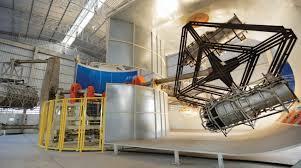
In the world of manufacturing, finding the perfect balance between product quality and production costs is essential. For industries that rely on plastic parts, Rotational Molding is quickly becoming a preferred method due to its ability to produce high-quality products while keeping costs low. This innovative technique offers numerous advantages, making it a standout choice for manufacturers looking to optimize their processes and meet the increasing demand for durable, cost-effective plastic components. Below, we explore how rotational molding ensures the highest quality plastic parts at a fraction of the cost compared to other manufacturing methods.
How Does Rotational Molding Maintain High Quality?
Rotational molding is well-known for its ability to produce plastic parts with exceptional quality. One of the core reasons for this high level of quality is the uniformity of the material distribution during the process. The method involves slowly rotating a mold while it is heated, allowing the material inside—usually a polymer or plastic resin—to melt and evenly coat the mold’s interior. This continuous rotation ensures that the plastic material forms a uniform layer across the entire surface of the mold.
The result is a seamless, thick-walled product with consistent strength and durability throughout. The absence of seams or joints, which are common weak points in products made using other methods, contributes significantly to the overall quality of the part. Whether it’s a small consumer product or a large industrial component, rotational molding ensures that the finished product maintains its integrity and performance even under challenging conditions.
What Makes Rotational Molding Cost-Effective?
One of the most attractive features of rotational molding is its ability to deliver high-quality parts at a low cost. Compared to other plastic manufacturing methods, such as injection molding or blow molding, rotational molding requires lower capital investment, particularly when it comes to tooling. The molds used in rotational molding are typically less complex and less expensive to create and maintain. This means that manufacturers can keep their initial costs down, leading to significant savings in the long run.
In addition to lower tooling costs, rotational molding also reduces material waste. The process is highly efficient in its use of plastic, with excess material being minimal. Any leftover material can often be recycled for future production runs, further reducing the cost of manufacturing. This efficiency in material use not only benefits manufacturers in terms of cost savings but also aligns with sustainability goals by minimizing waste.
How Does Rotational Molding Improve Durability and Performance?
Durability is one of the key factors that makes rotational molding such an attractive option for plastic part production. The process results in parts that are more robust and capable of withstanding wear and tear, which is crucial for applications in industries like automotive, agriculture, and outdoor equipment. The uniform wall thickness achieved through rotational molding helps to ensure that the final product is strong and resistant to impact, chemicals, and environmental factors.
Moreover, the seamless nature of the products produced through rotational molding adds another layer of durability. Unlike injection molded or blow molded parts, which often have seams or weld lines that can create weak points, rotationally molded parts are completely uniform, making them less prone to failure under stress. This enhanced durability contributes to the longevity of the product and reduces the need for replacements or repairs, ultimately saving costs for businesses and consumers alike.
Can Rotational Molding Produce Complex Shapes at Low Cost?
Rotational molding is particularly valued for its ability to produce complex shapes with ease. Whether the design requires intricate curves, multi-compartment structures, or irregular geometries, rotational molding can handle it with remarkable precision. This flexibility is achieved without the need for additional tooling or complicated adjustments, which would be required in other manufacturing methods such as injection molding.
The simplicity of the process makes it cost-effective even for products with complex designs. Unlike methods that require multiple steps or different parts to be assembled, rotational molding allows manufacturers to create a finished product in a single step. This eliminates the costs and time associated with assembly, reducing the overall production time and cost.
How Does Rotational Molding Contribute to Sustainable Manufacturing?
Sustainability has become a top priority for many manufacturers, and rotational molding is well-suited to meet this demand. The process produces minimal material waste, as it only uses the exact amount of plastic needed for each part. Furthermore, the plastic material used in rotational molding is often recyclable, allowing manufacturers to reuse any excess or scrap material in future production runs.
The lightweight nature of the products produced through rotational molding also contributes to sustainability efforts. Lighter products are easier to transport, which reduces fuel consumption and lowers the carbon footprint associated with logistics. As companies continue to prioritize eco-friendly manufacturing practices, rotational molding offers a solution that balances both high-quality production and environmental responsibility.
Conclusion
Rotational molding stands out as a highly effective manufacturing method that delivers both exceptional quality and cost-efficiency. Its ability to produce durable, seamless plastic parts with consistent thickness makes it a reliable choice for industries requiring high-performance components. The process’s lower tooling costs, minimal material waste, and design flexibility ensure that manufacturers can keep production costs low without compromising on product quality. Additionally, rotational molding’s contribution to sustainability aligns with the growing demand for environmentally responsible manufacturing.
As industries continue to seek innovative solutions that meet both cost and quality requirements, rotational molding is proving to be an indispensable tool in achieving these goals. Whether for large-scale industrial components or smaller consumer products, the power of rotational molding to provide high-quality plastic parts at a low cost ensures its place at the forefront of modern manufacturing.